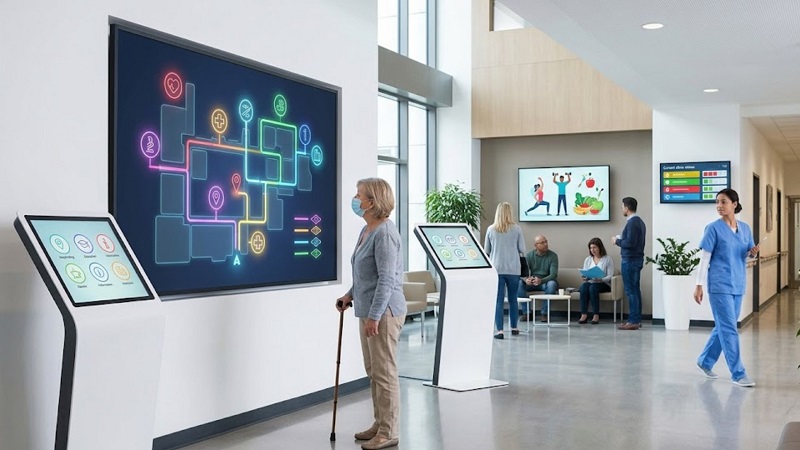
Healthcare facilities move fast. Patients wait. Staff run between departments. Information changes by the hour. Digital signage solves this problem. It replaces static posters with live, updatable screens. Hospitals now use digital signage to guide patients, share health tips, and reduce front-desk calls.
This blog explains why Digital Signage for Healthcare matters so much right now. It covers benefits, use cases, costs, and best practices. It also answers common questions at the end.
Beyond the Poster: What Digital Signage Really Means
Digital signage means screens that display digital content. These screens sit in lobbies, waiting rooms, hallways, and elevators. Content updates remotely. Staff pushes new messages in seconds. No printing. No manual replacement.
Healthcare digital signage does more than show ads. It manages queues and shares wayfinding maps. Broadcasts emergency alerts. It plays health education videos. It even shows real-time wait times.
Digital Signage for Healthcare adoption grew fast after 2020. Hospitals needed touchless communication. Digital signage delivered that instantly.
The Case for Screens Over Static Signs
Patients feel anxious in hospitals. Clear information reduces that anxiety. Digital signage keeps people informed without extra staff effort.
Here are the core reasons hospitals invest in Digital Signage for Healthcare:
- Digital signage reduces patient confusion.
- Digital signage cuts staff workload.
- Digital signage improves safety communication.
- Digital signage boosts patient satisfaction scores.
- Digital signage supports multilingual messaging.
Each screen acts like a silent staff member. It answers questions before patients ask them.
Seven Ways Digital Signage Earns Its Keep
1. Never Get Lost Again
Hospitals are large and confusing. Patients get lost often. Digital signage shows interactive maps. Patients tap a department name. The screen shows the route. This cuts front-desk questions significantly.
2. The Waiting Game, Made Bearable
Long waits frustrate patients. Digital signage displays live wait times. This approach sets expectations early. Patients feel less stressed when they know what to expect.
3. A Captive Audience, Put to Good Use
Waiting rooms offer a captive audience. Digital signage plays short health videos. Topics include diabetes care, vaccination schedules, and hygiene tips. Patients learn while they wait.
4. When Seconds Matter
Every hospital needs fast emergency communication. Digital signage broadcasts alerts instantly. It can show evacuation routes, lockdown notices, or weather warnings. Speed saves lives here.
5. Goodbye, Paper Posters
Paper posters cost money and time. Staff print, laminate, and replace them often. Digital signage removes this cost. One screen replaces dozens of posters.
6. Speaking Every Patient’s Language
Hospitals serve diverse communities. Digital signage switches languages instantly. This helps non-English speakers understand instructions clearly.
7. Freeing Up Front-Desk Hands
Front-desk staff answer repetitive questions daily. Digital signage handles many of these questions automatically. Staff can then focus on patient care instead.
Where the Screens Go: A Department-by-Department Look
Digital Signage for Healthcare fits many hospital areas. Below is a quick breakdown.
| Location | Digital Signage Use Case | Key Benefit |
| Main Lobby | Wayfinding maps, welcome messages | Reduces confusion |
| Waiting Rooms | Wait times, health tips, news | Improves patient experience |
| Pharmacy | Prescription status updates | Reduces crowding |
| Emergency Department | Triage status, safety alerts | Increases transparency |
| Cafeteria | Menus, daily specials | Improves staff morale |
| Elevators | Floor directories, ads | Saves space |
| Nurses’ Station | Staff schedules, alerts | Improves coordination |
| Patient Rooms | Care plans, doctor info | Builds trust |
This table shows how flexible digital signage really is. One system serves many departments at once.
The Ripple Effect on Patient Experience
Patient experience drives hospital ratings. Digital signage plays a direct role here. It calms nervous patients and answers questions instantly. It makes waiting feel shorter.
Studies show patients rate hospitals higher when communication feels clear. Digital signage supports that clarity. Screens show doctor bios, department info, and safety tips. Patients feel more confident in their care.
Digital signage also entertains. Long waits feel shorter with light content. News, weather, or trivia keeps patients engaged. This small detail improves overall satisfaction.
Not Just for Patients: A Quiet Ally for Staff
Digital signage isn’t just for patients. Staff benefits too. Break rooms display shift schedules. Hallways show policy updates. Nurses’ stations show bed availability in real time.
This internal use of digital signage improves coordination. Staff spend less time searching for information. They spend more time with patients.
Picking Your System Without Getting Burned
Not every Digital Signage for Healthcare system fits every hospital. Facilities should consider a few factors before buying.
The Brains Behind the Screen
Look for software that’s easy to use. Staff without technical skills should update content quickly. Cloud-based platforms work best for multi-location hospitals.
The Hardware That Won’t Quit
Choose commercial-grade screens. These run 24/7 without failure. Consumer TVs wear out fast under constant use.
Playing Well With Others
Good digital signage integrates with hospital systems. This includes patient management software and emergency alert systems. Integration keeps content accurate automatically.
Guarding Patient Privacy
Healthcare data is sensitive. Digital signage systems must meet HIPAA guidelines. Never display patient-identifiable information publicly.
Built to Grow
Hospitals grow. Digital signage should grow too. Choose a system that supports new screens without major cost increases.
What’s the Damage? Breaking Down the Costs
Digital Signage for Healthcare costs vary based on screen count and software. Small clinics may spend a few thousand dollars. Large hospital networks may invest six figures.
Typical cost factors include:
- Screen hardware
- Media players
- Content management software licenses
- Installation and mounting
- Ongoing content creation
Despite the upfront cost, digital signage often pays for itself. It reduces printing costs. It reduces staff time spent answering questions. Many hospitals see returns within a year.
Rules of the Screen: Best Practices That Work
Follow these Digital Signage for Healthcare tips for stronger results:
- Keep messages short and clear.
- Update wait times frequently.
- Use large, readable fonts.
- Avoid clutter on each screen.
- Test content on all screen sizes.
- Schedule content by time of day.
- Review analytics regularly.
Simple screens work better than busy ones. Patients scan quickly. Clear digital signage communicates faster.
What’s Next for the Screens on the Wall
Digital Signage for Healthcare keeps evolving. AI now personalizes content based on location and time. Interactive kiosks let patients check in without staff help. Voice-activated screens assist visually impaired patients.
Hospitals that adopt digital signage early gain a strong advantage. They build trust and run more efficiently. They keep patients informed at every step.
Smart hospitals are already testing sensor-driven screens. These screens detect crowd size near a check-in desk. They then adjust wait-time estimates on the fly. Some systems now pull live data from lab queues and pharmacy counters. This keeps every number on screen accurate to the minute. Wearable integration is the next step.
A screen could soon greet patients by appointment type, without exposing any personal data. Chatbot-style kiosks are also entering hospital lobbies. Patients ask a question aloud, and the screen answers instantly in plain language. None of this replaces staff. It simply removes friction from routine moments.
As 5G networks spread, screen updates will happen in real time across entire hospital campuses. The hospitals that experiment now will set the standard others follow later. Digital signage is no longer just a nice-to-have. It’s becoming core infrastructure.
The Bottom Line
Digital Signage for Healthcare transforms how hospitals communicate. It guides patients, reduces stress, and saves staff time. It cuts costs. Hospitals that invest in digital signage see real improvements in patient experience and operational efficiency.
Any healthcare facility, large or small, can benefit from digital signage. The technology is affordable, flexible, and proven. Start with one department. Measure results. Expand from there.
Quick Answers: Digital Signage FAQs
1. What is Digital Signage for Healthcare?
Digital Signage for Healthcare refers to screens that display real-time information in hospitals and clinics. This includes wayfinding, wait times, health education, and emergency alerts.
2. How much does digital signage cost for a hospital?
Costs depend on the number of screens and software chosen. Small clinics may spend a few thousand dollars. Large networks may invest much more.
3. Is digital signage HIPAA compliant?
Digital signage can be HIPAA compliant if configured correctly. Never display patient-identifiable data on public screens.
4. Can digital signage reduce hospital wait times?
Digital signage doesn’t reduce actual wait times, but it improves perceived wait times. Patients feel calmer when they see live updates.
5. What screens work best for hospital signage?
Commercial-grade displays work best. They run continuously without overheating or failing.
6. Can digital signage support multiple languages?
Yes. Most digital signage software supports multilingual content. This helps hospitals serve diverse patient populations.
7. How often should hospitals update digital signage content?
Wait times should update in real time. General content should be updated weekly or monthly to stay relevant.
8. Does digital signage help during emergencies?
Yes. Digital signage broadcasts alerts instantly across all screens. This speeds up emergency response and patient safety.
9. Can digital signage integrate with hospital appointment systems?
Yes. Most modern platforms connect with scheduling and queue-management software. This keeps wait times and patient calls accurate in real time.
10. Is digital signage difficult for staff to manage?
No. Most cloud-based platforms use simple dashboards. Staff can update content, schedule messages, and push alerts without technical training.
Leave a Reply